-
Memory Games

- Matching Games
Matching games – Online and Free


Welcome to the matching game — one of the most beloved card games of all time, now available online and completely free! On Memozor, you'll find 200+ free matching games for kids, adults, and seniors.
Our online version of the classic Memory® board game — also known as Concentration game — is simple to learn and fun for the whole family. Explore our full collection of memory games on Memozor!
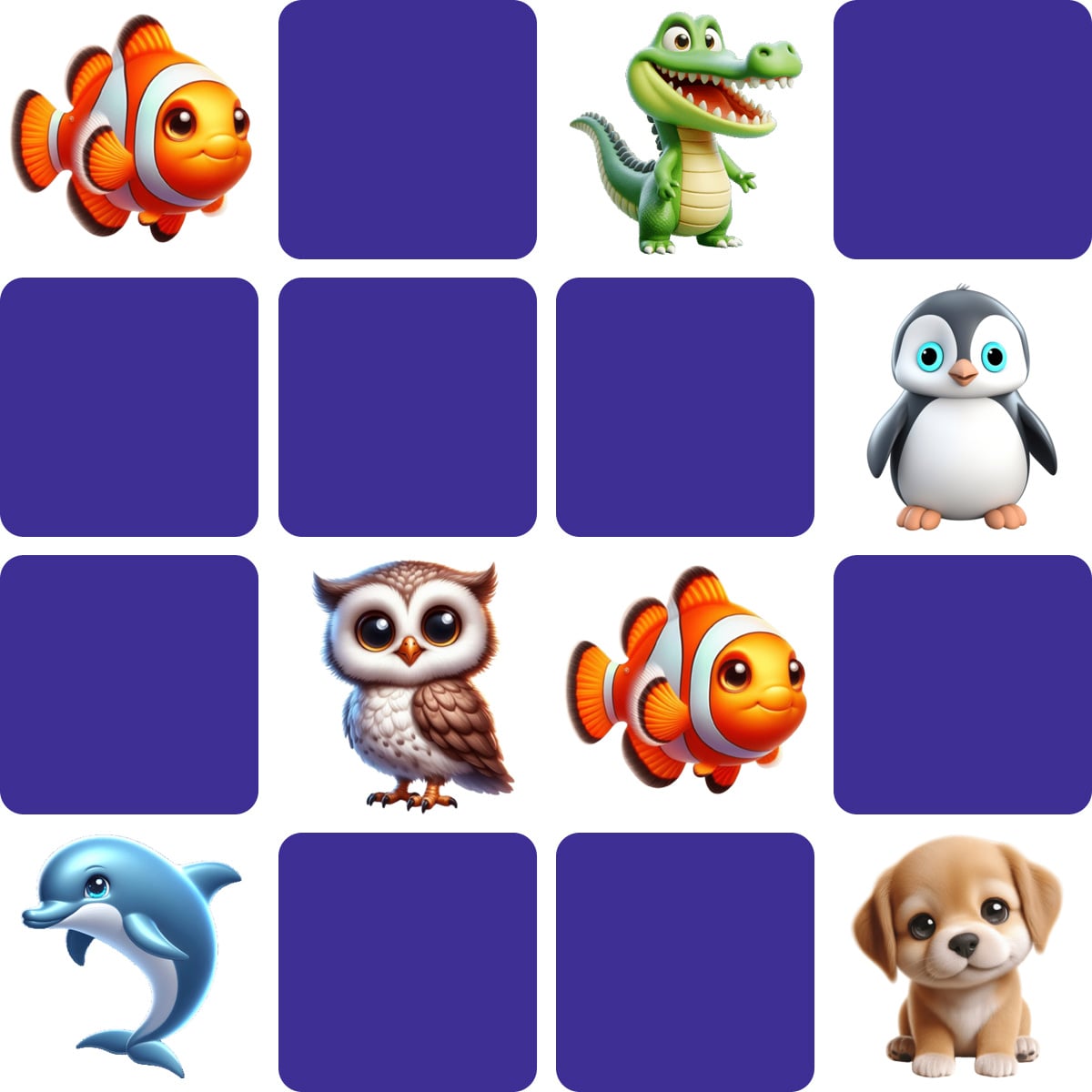
The rules of the matching game are straightforward: flip two cards per turn and try to find identical pairs. Match all the pairs as fast as possible in Solo mode, or outscore your opponent in 2-Player mode. Each game is randomly generated, so no two games are ever the same — you can play over and over without getting bored!
Our online matching games come in multiple difficulty levels, and you can choose exactly how many cards to play with using the settings below the game. Whether you're looking for a memory workout or a fun challenge with a friend, Memozor has you covered. Play solo, challenge a friend sitting next to you, or take on the computer — and stay tuned, because online multiplayer is coming soon, so you'll be able to invite a friend and play remotely!

























Frequently Asked Questions
How do I play this matching game online?
Before starting the game, choose how many cards you want to play with, depending on your preferred difficulty level. You can then play in Solo mode, challenging yourself to find all the pairs as fast as possible and with as few mistakes as possible. You can also play against the computer, choosing its difficulty level. This level simulates a more or less accurate human memory: easy mode is recommended for beginners, as hard mode has an almost flawless memory. The goal is then to find more pairs than the computer. Finally, you can play with a friend sitting next to you, taking turns. The game always indicates whose turn it is, and whoever finds the most pairs wins!
Can I play the matching game with 2 players?
Yes! Currently, 2-player mode is available in two ways: either against the computer, or with a friend sitting next to you, taking turns on the same screen. Remote 2-player mode is coming soon, with the ability to invite a friend for a game — and this will be available for every matching game on the site. In the meantime, you can already play remotely by starting a video call with screen sharing, and enabling the numbered cards option. One player then flips all the cards — both their own and their opponent's — following the card numbers called out by the other player.
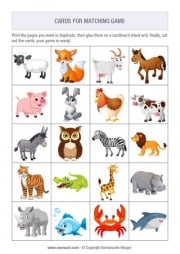
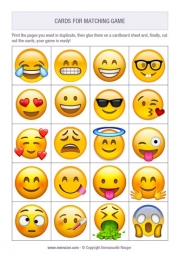
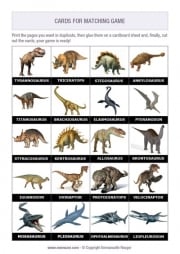
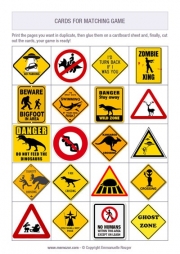
Another way to play with multiple people — 2 or even more — is to print one of our memory games available in PDF format, in two copies. Simply glue the sheets onto a rigid backing (cardboard, cardstock...) and cut out the cards one by one. You'll have a real physical matching game to enjoy with family or friends, no screen needed! Check out all our printable matching games to find your favorite theme.
Is the matching game free to play?
Yes! All matching games on Memozor are completely free to play, with no download or registration required. Just open the game and start playing right away, on any device — computer, tablet, or smartphone.
Why play matching games?
Matching games are much more than just fun — they're also a great workout for your brain! Regularly playing the matching game helps improve short-term memory, focus, and attention. They're also a wonderful way to spend quality time with family or friends, and a fantastic learning tool for young children.
Can I play the matching game on my phone or tablet?
Absolutely! All matching games on Memozor are fully compatible with smartphones and tablets, on both iOS and Android. The game automatically adapts to your screen size, so you get the best experience whether you're on a phone, tablet, or desktop computer.
Origin and History of the Matching Game
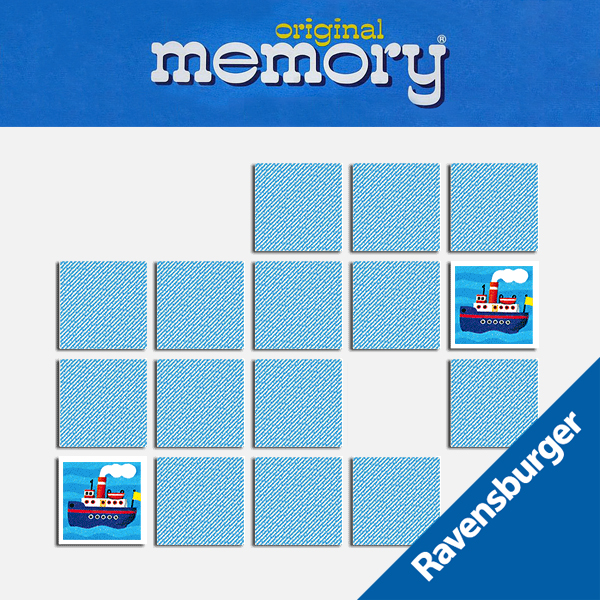 Original Memory ® - Ravensburger
Did you know that the matching game was invented by a Swiss grandfather? Heinrich Hurter came up with the idea of creating a homemade card game from magazine pictures to entertain his grandchildren. The game was an instant hit with the whole Hurter family.
In 1957, William, one of Heinrich's sons, pitched the concept to Ravensburger, a well-known German toy company. Two years later, in 1959, Ravensburger released the very first edition of the game under the name Bilder Memory®. It was an immediate success, and the game quickly spread to homes across the globe. Over the decades, Memory® was adapted into countless versions and themes, becoming a true classic of family board games. In 2019, Ravensburger's Memory® celebrated its 60th anniversary!
Below you'll find some of the older editions that shaped the history of the Ravensburger Memory® game. To explore more vintage editions, visit our Original Memory® Vintage games section.
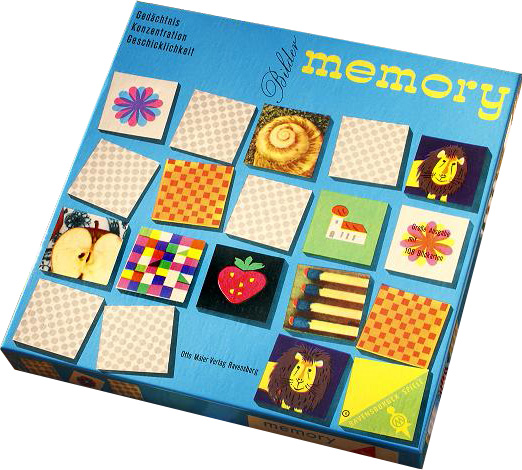
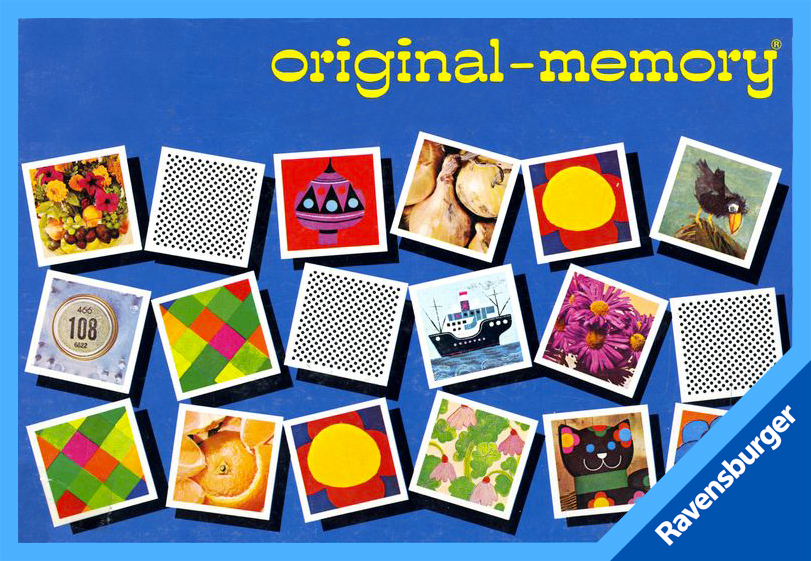
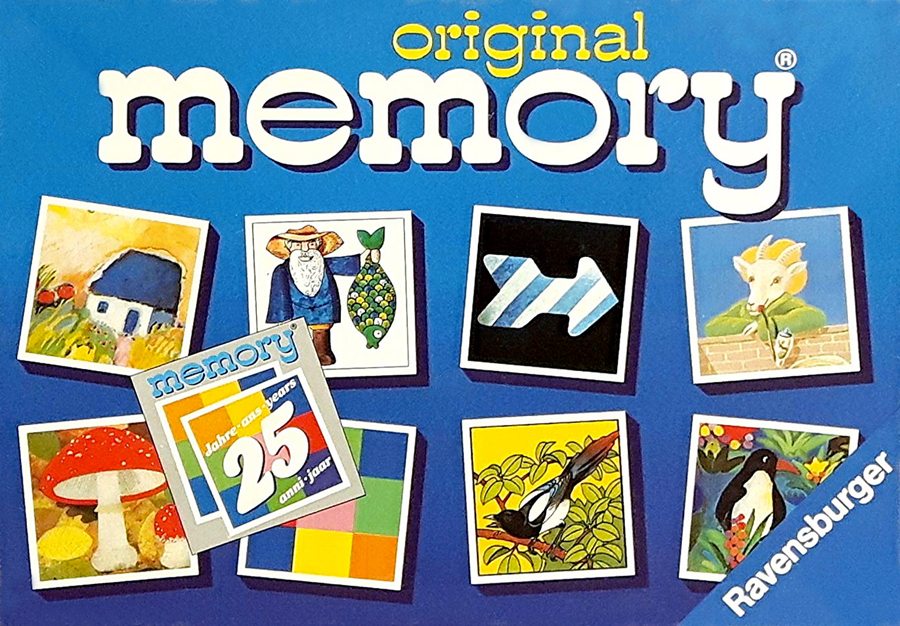
Ravensburger's Memory® left a lasting mark on the world of board games, becoming a timeless classic that promotes memory skills, concentration, and family fun. Its success inspired countless memory-based games and activities worldwide. Today, the core mechanics of the matching game have been adapted to digital formats — including right here on Memozor — bringing this beloved game to a whole new generation of players.
How to Play the Matching Game

1. Set up the cards
All the cards are shuffled and placed face down on the table, arranged in rows and columns.

2. Player 1 flips two cards
Player 1 starts by flipping two cards, one after the other. Since the cards don't match, they are turned back face down. It's now Player 2's turn.

3. Player 2 takes their turn
Player 2 flips two cards, one after the other. Since they don't match, they are turned back face down. Play then moves to Player 1 — or to Player 3 if you're playing with more than two!

4. A pair found — Player 1 plays again!
It's Player 1's turn again. This time, the two flipped cards are identical — a match! The pair is removed from the board and added to Player 1's score.
Since Player 1 found a match, they get to play again! They flip two more cards, but this time they don't match — so the cards are turned back face down, and it's Player 2's turn.

5. Keep playing until the last pair
The game continues turn after turn, until all pairs have been found. The player who collected the most pairs wins!