-
Memory Games

-
Times Tables
- Times Tables Games
Times Tables Games - Online and Free


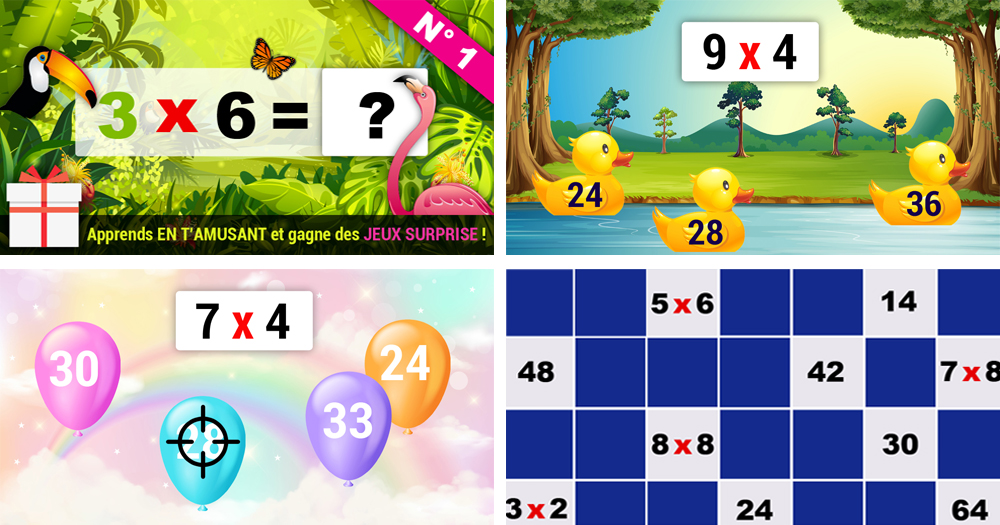
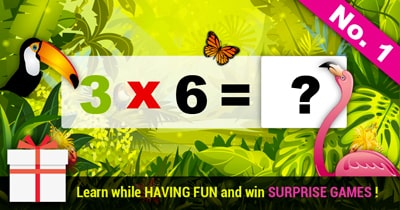
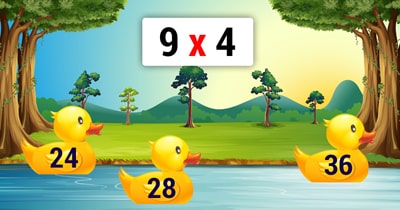
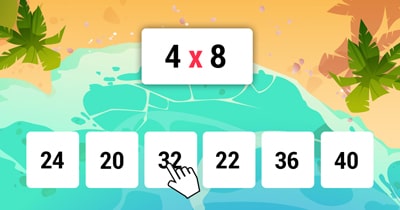
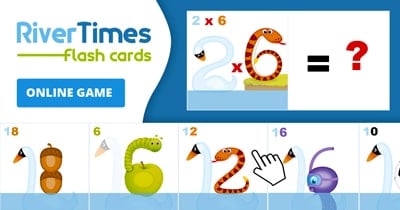
What if we turned the chore of learning your times tables into something fun? With our online games, practice becomes a real challenge: every time your child completes a table without a single mistake, they unlock a surprise game — balloon shooting, ducks on the river, keyboard entry... there's something for everyone!
The idea is simple, and designed to encourage perseverance: each perfect score unlocks a new game, one at a time. Your child always has a new goal within reach, which encourages them to try again and keep progressing without even realizing it.
All our games are free, available directly online with no download required, and cover the full range of times tables, from the 2 times table to the 12 times table. Perfect for reviewing at home, before a test, or simply for developing a taste for math while having fun.
Discover all our online times tables games

How to use these times tables games?
1- Focus on one table at a time
In each of these games, you can switch tables using the buttons below the game. Choose the smallest table your child still struggles with: if they already know their tables perfectly up to the 5 times table, start with the 6 times table; if they still hesitate on the 5 times table, go back to that one first.
Then have them practice on that table only, for a few consecutive days. Generally, 10 minutes a day for 3 or 4 days is enough — but feel free to take more time if needed. The better your child knows one table, the easier the next ones will feel. Once they've mastered every multiplication in the current table, they can move on to the next one.
2- "INCREASING" mode and "RANDOM" mode
At the start, go with "INCREASING" mode, which is easier to begin with. Once your child feels more comfortable, "RANDOM" mode will be ideal for further practice.
Increasing mode presents the multiplications in order, from smallest to largest: for the 3 times table, for example, 3×1, then 3×2, 3×3, and so on up to 3×9.
Random mode, on the other hand, displays the multiplications in a random order chosen by the computer — a bit more challenging, but more effective for training memory.
3- Choose your favorite number format
Below each game, a "Number Format" setting lets you choose the font used to display the digits, from standard fonts to school-style fonts. Pick the one that suits your child best.
4- Play again a week later
Once a table is well learned, schedule a quick review about a week later: 5 to 10 minutes is enough. This helps make sure the table stays in your child's memory for the long term.
Making it easy to learn the times tables
These times tables games make learning easy, from the 2 times table to the 12 times table.
There's no secret to memorizing times tables: it takes practice. Writing out multiplications on paper, over and over, can work for some children — but it's a repetitive task, and they tend to lose interest quickly. Thanks to the playful approach of our games, your child simply clicks on the right answer or types it in, depending on the game. This takes less effort than writing, keeps them engaged longer, and lets them spend more time on their practice. The effectiveness of our games rests on 6 key teaching principles:
1- Learning through play
This is an essential factor. For many children, when learning feels like a chore, motivation drops — they may even become discouraged. A discouraged child is less attentive, which makes learning less effective. By approaching times tables through play, your child's attention and motivation are both strengthened. This game-based approach gets excellent results, simply because it's more enjoyable to learn while having fun.
2- Keeping your child motivated
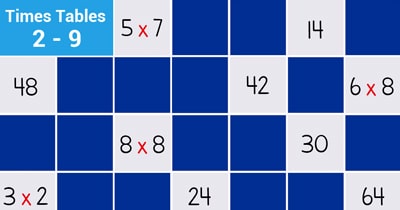
Your child's efforts and progress are rewarded with bonus games built into the main game. Every perfect score on a table unlocks a new game from those available for that table — with over 30 different games to discover in total (puzzles, memory games, coloring, tic-tac-toe, Simon, sliding puzzles, picking games, and more), suitable for every child, girl or boy, whatever their age.
Motivated by these rewards to unlock, your child will practice for longer — a real asset for memorization. These bonus games also give them a chance to take a break before going back to practicing: each round is limited to 2 minutes, after which they'll need to return to the main game to unlock a new one. This time limit makes sure entertainment never takes over from learning.
3- Boosting visual memory
These games strengthen visual memory through two mechanisms:
- When your child makes a mistake, it's flagged and the correct answer is shown right away. Without even realizing it, just by seeing the right answer, they start to memorize it.
- In the settings below each game, "COLORFUL" mode assigns a different color to each table — another handy trick for reinforcing visual memory.
4- Repetition
Repetition is essential for long-term memorization, and all our games are built around this principle. By showing the correct answers multiple times, your child learns their times tables faster:
- The correct answer is shown for the first time as soon as your child makes a mistake.
- It's shown a second time at the end of the round: once your child has answered every multiplication in a table, the virtual teacher recaps the ones they got wrong, along with the correct answers.
- To unlock a reward game, your child needs to complete a table with a perfect score. Motivated by the game they're hoping to win, they won't hesitate to try the table again until they get it right. And since every perfect score unlocks a new game, they'll always have a good reason to give it another go and unlock more.
5- Help from a virtual teacher
Your child gets support from a virtual teacher, who offers tips and tricks for memorizing their tables. She points out mistakes and encourages your child throughout the game. The result: your child becomes independent in their practice, and multiplication tables stop being a chore — for you too!
6- Tracking your child's most common mistakes
Each game keeps track of your child's most common mistakes, displayed right at the bottom, below the game. This makes it easy for you to see them and go over these specific points together — by having your child recite them a few times, for example.